Brands are just ideas
Most of us assume brands are tangible things, we associate them with companies, and people. In reality, brands are just ideas; just like a patent, brands can be sold. As the name implies, a brand is a marking, a logo, a name, a bunch of ideas and concepts. They routinely move from one hand to another without anybody noticing.
An example: Häagen-Dazs
Let's take Häagen-Dazs as an example. That brand itself was created in the 1950s by the Mattus family and their business, who had been making ice cream products in New York since the 1910s. The brand was specifically created as a high-end ice cream to compete with all the other ice cream brands at the time. We can find the original trade mark at the US patent office (Source: US Serial Number 72108344), they filed the application on Nov. 14, 1960.
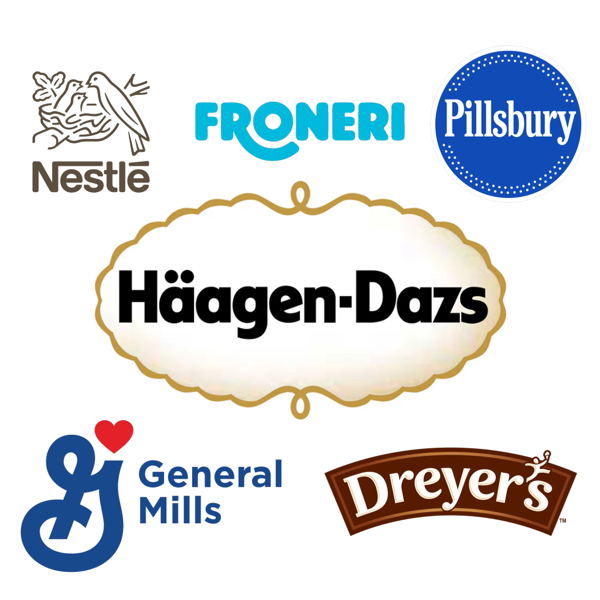
In 1983, the company (with the brand) was bought by Pillsbury. Later on in 1999, Pillsbury merge their ice cream operations in the US with Nestlé (under "Ice Cream Partners USA"). Then, General Mills bought Pillsbury, at which point Nestlé exercised a right to a 99-year license for the Häagen-Dazs brand in the US (press release). It has then been produced by Dreyer's (a subsidiary of Nestlé) ever since. That North American business, was eventually sold to Froneri a joint-venture of Nestlé (Switzerland) and PAI, a French private equity firm.
This brand, which was created by Polish-Jewish immigrants in New York, specifically named to sound Danish, is now licensed to multi-nationals managing hundreds of other brands.
Today, Häagen-Dazs is made primarily in three different locations to serve their specific markets: US, Japan and France where the majority of the production is done, exporting to over 90 countries (source: Häagen-Dazs France). The trademark is owned by HDIP Inc (Häagen Dazs IP), a subsidiary of General Mills. To sum it up, operations are managed by General Mills (US) in the whole world except in the US and Canada, where it is managed by a Swiss-French joint venture. What a weird setup.
Who benefits?
If you look at the "History" or "About us" pages of the various Häagen-Dazs web sites, you'll see a continuous history, adapted to the market, tailored to make you feel like the legacy of the Mattus family lives on in the product. The reality is a bit different, large corporations have transformed a family company into an international idea. The brand itself is like pointer in the neural network of every consumer on Earth. Financiers managing those brands do not care so much about the product, they care about that specific link between a brand and the ideas living in our brains. It could be toothpaste or ice-cream. There's most likely dozens of ice cream shops around your town with better ice creams, made from local products, by owners and employees living around you. They know you, you know them. Do not get fooled by finely crafted brands owned by large multi-nationals. Their brand assets are there to deceive you.
I'm not saying the product is bad, I love Häagen Dazs. But the product is made differently from one country to another, I know knowing about how it is made, and by whom. I know investors and banks make the majority of the money. I much prefer to buy ice cream from my local shop. When I drive around, I can see the cows who made the milk. I can meet the farmer in a coffee shop, I can have a human relationship with every part of the stack, it's not a logo on a shelf in a faceless supermarket. Banks and investors used to be tools for the entrepreneurs, helping them make their business profitable. Financiers eventually eat successful businesses, and the brands become a tool for profit. Customers and smaller businesses naturally have a healthy relationship, work and products serve the customer, the entrepreneur makes a living serving to their community. At larger scales, new characters appear who tend to be detached from the customer-entrepreneur relationship, they often take ownership of the relationship, by carefully replacing a concrete link between the customer and the business, with an idea, sustained by marketing and careful communication campaigns.